
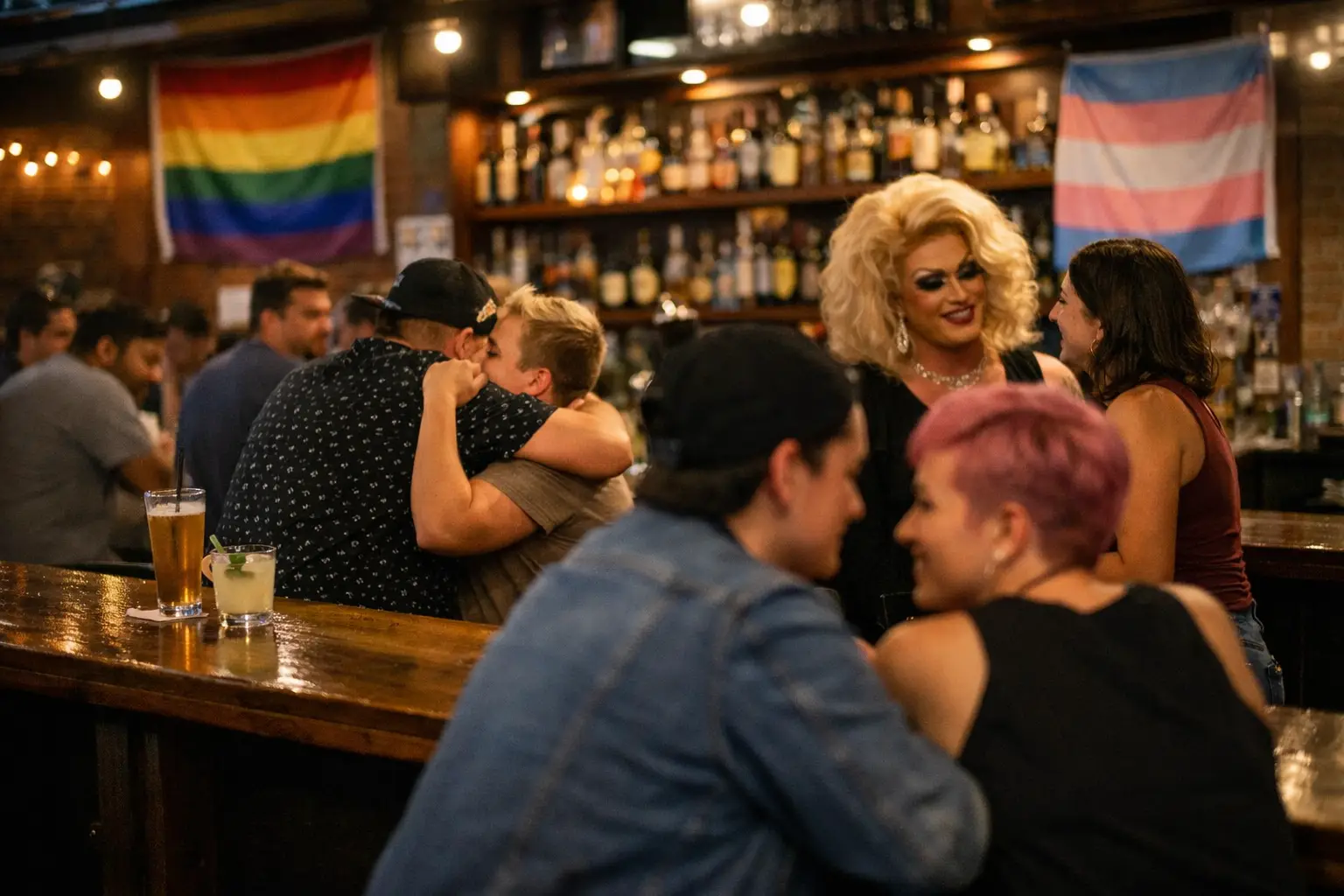
You can usually tell within a minute whether a place feels right. Not perfect, not performative, just easy. The staff greet you like you belong there, the room feels relaxed instead of tense, and nobody makes you feel like you need to explain yourself. That is what people are really looking for when they search for a safe bar for queer community – not just a label, but a place where they can settle in, order food, meet friends, and enjoy the night.
That feeling does not happen by accident. It comes from consistency, from the kind of place that has built trust over time and still pays attention to what guests need right now. For some people, that means a familiar neighborhood bar where they know the bartender. For others, it means a first visit that does not feel awkward, overpriced, or packed with attitude. Usually, it means both.
What a safe bar for queer community actually feels like
A lot of bars say they are welcoming. The better question is whether guests can feel that welcome without having to test it. A safe space in real life is often made up of small things that add up fast.
It starts with the basics. Staff set the tone. If the bartenders and servers are friendly, steady, and respectful, the whole room follows that lead. If the vibe depends on who is working that night, people notice. A good bar feels dependable whether you stop in for happy hour, late-night drinks, dinner on the patio, or a weekly event.
The crowd matters too, but not in the way people sometimes think. A safe bar for queer community does not need to feel exclusive or closed off. In fact, many of the best places are mixed rooms. You will see regulars, first-timers, LGBTQ+ guests, allies, couples, friend groups, and people just there for a burger and a beer. What matters is that the room has a shared understanding – be respectful, relax, and let people be themselves.
Then there is comfort. That might sound simple, but it matters. If the music is so loud you cannot talk, if the room feels tense, or if every visit feels like a scene you have to keep up with, some people are going to stop coming. Not everyone wants a club every weekend. Plenty of people want a place where they can eat, laugh, watch the room, play pool, and stay awhile.
Safety is about more than the front door
People often talk about safety like it begins and ends with getting in the door. It goes further than that. Real comfort includes the whole experience.
A bar feels safer when the service is grounded and the expectations are clear. You know when the kitchen is open. You know whether there is entertainment that night. You know if it is a good place to bring a group or slide in for a casual dinner. There is a big difference between a welcoming neighborhood bar and a place that feels chaotic unless you already know the routine.
Food matters more than some bars admit. If somebody in your group wants dinner, another wants appetizers, and someone else is just there for drinks, a stronger food menu makes the night easier for everyone. House-made burgers, pizza, sandwiches, and solid appetizers are not just extras. They give people a reason to stay longer, meet earlier, or make the bar the whole plan instead of the stop before somewhere else.
That is especially true for people who are not looking for a high-pressure nightlife scene. Sometimes the best version of safety is having options. You can grab dinner first, head out to the patio, join a game of pool, stick around for karaoke, or call it a night after one drink. A place with range gives guests more control over how they want to spend their time.
The role of entertainment in a welcoming bar
Events can make a bar feel more open, but only if they fit the room. The goal is not nonstop noise. It is giving people easy ways to join in.
That is why weekly entertainment works so well in a neighborhood setting. Music Bingo, Name That Tune, karaoke, pool tournaments, and drag shows all create a reason to come in without making the night feel intimidating. You do not need a big plan. You can show up with friends, order dinner, and let the evening build from there.
There is also something useful about recurring events. Regular programming helps new guests feel less like outsiders. If there is a known event on the schedule, people know what kind of night to expect. That lowers the pressure, especially for first-time visitors or anyone trying a new place after a bad experience somewhere else.
The best bars understand that entertainment should add to the room, not take it over. Some nights call for energy. Some nights are better when people can still hear each other across the table. A bar that can handle both tends to feel more welcoming to more people.
Why neighborhood bars often get it right
There is a reason people keep coming back to established local bars. History matters, but not just for nostalgia. A place that has served its community for years usually understands that trust is earned in ordinary ways.
It is in the bartender remembering your drink. It is in the kitchen putting out food that is actually worth ordering. It is in the patio being a real place to hang out instead of an afterthought with a couple tables. It is in regular entertainment that gives the week some rhythm. And it is in the fact that you do not have to wonder whether you will be comfortable there this time.
For LGBTQ+ guests, that consistency can mean a lot. So can a bar’s roots. A place with a long history in the community often carries a sense of ease that newer spots have to work harder to build. At the same time, history alone is not enough. If a bar wants to stay relevant, it still has to offer what people want now – good food, decent prices, solid service, late-night hours, and reasons to stop in beyond special occasions.
That balance matters in Toledo. People want places with personality, but they also want practical value. They want a bar where they can come for a weeknight bite, meet friends on the patio, catch a drag show, or play a few games without feeling like every visit has to turn into a production. That is a big part of what keeps a neighborhood place busy across different crowds and age groups.
What to look for before you pick a place
If you are trying to find the right bar, it helps to think past the broad promise of being welcoming. Look at what the place actually offers and how people use it.
If the menu is strong, that is a good sign the bar expects people to stay. If the calendar includes recurring events, that tells you there is a real local crowd behind it. If there is a patio with its own service area, that gives you another way to enjoy the space, especially when you want a more relaxed night. If happy hour and late-night service are part of the routine, the bar is probably built for more than one kind of guest.
It also helps to ask what kind of night you want. Some people want a packed dance floor. Some want a conversation over drinks and appetizers. Some want karaoke and a burger. Some want to sit outside, watch the traffic of the evening, and order another round when they are ready. A good neighborhood bar can hold more than one version of a good night.
That is one reason Casey’s has mattered to so many people over the years. Its LGBTQ+ roots are real, but the appeal today is broader in the best way. You can come in for house-made food, cold drinks, pool, patio weather, or a weekly event and still get that same easy feeling people remember. It feels lived-in, local, and welcoming without trying too hard.
A good bar lets people relax into the night
At the end of the day, a safe bar is not just about avoiding a bad experience. It is about finding a place where a good night can happen naturally. Maybe that starts with happy hour. Maybe it starts with pizza and a round of drinks. Maybe it turns into karaoke, Music Bingo, or one more hour on the patio because nobody is ready to leave yet.
The best bars make room for all of that. They do not ask people to fit a narrow mold. They offer good food, familiar faces, fair prices, and enough personality to make the night feel worth repeating. If a place can do that while giving queer guests the comfort of knowing they are genuinely welcome, it becomes more than a bar. It becomes part of people’s routine, and sometimes part of their story.
If you are looking for that kind of place, trust the room that lets you exhale a little when you walk in.